





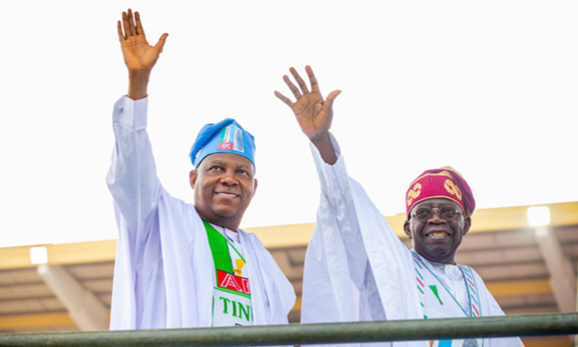
The delicate balance of religion and politics in Nigeria has once again taken center stage as a fresh, heated debate erupts over the All Progressives Congress (APC) same-faith presidency. With political stakeholders across the country quietly laying the groundwork for the 2027 general elections, internal factions and external observers are deeply divided on whether President Bola Tinubu should retain a Muslim-Muslim ticket. The controversial strategy, which first paired Tinubu with Vice President Kashim Shettima, remains a highly sensitive flashpoint in a nation historically accustomed to ethno-religious balancing at the highest levels of governance.
Proponents of the same-faith arrangement within the ruling party argue that political math and electoral numbers should ultimately dictate the APC’s strategy rather than religious sentiments. Party loyalists and certain northern chieftains maintain that the configuration successfully delivered victory and has not resulted in the institutional bias that critics originally feared. They assert that shifting the formula ahead of the next election cycle could trigger severe grumbling and fragmentation within the party’s core northern voting bloc, which views the preservation of the current ticket as essential to maintaining political stability and continuity.
Conversely, a growing wave of opposition from political analysts, civil society groups, and Christian bodies warns that doubling down on the same-faith ticket is pushing the country’s pluralistic nature too far. Critics argue that persistent socio-economic challenges and regional security anxieties have made Nigerians more conscious of inclusivity, making a multi-religious ticket vital for national unity. Opponents stress that ignoring the deep-seated yearning for religious representation in a country almost evenly split between Christians and Muslims could alienate substantial voter segments and create an uphill battle for the APC.
As the debate intensifies, political strategists note that the ruling party finds itself in a complex dilemma where tactical electoral advantages collide directly with the necessity of national cohesion. While top government officials continue to mobilize support for the administration’s second-term ambitions, the brewing friction over the ticket’s composition highlights the deep complexities of navigating power in Nigeria. With the party’s official election timetable already drawing closer, the ultimate decision on the 2027 structure will serve as a critical test of the APC’s internal cohesion and its sensitivity to the country’s diverse landscape.
For an analytical breakdown of how this controversial arrangement impacts the political landscape, you can watch this political analysis on the APC same-faith ticket debate, which details the competing arguments and potential risks for the upcoming electoral cycle.
