





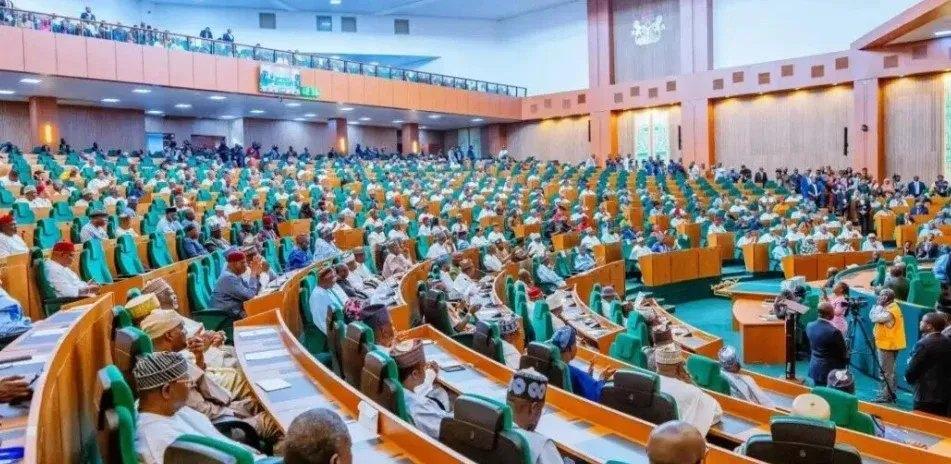
The House of Representatives Public Accounts Committee (PAC) has issued a stern directive to the Office of the Accountant-General of the Federation (OAGF) to provide a comprehensive, detailed account of trillions of naira in outstanding revenues owed by key government enterprises, including the Central Bank of Nigeria (CBN) and the Nigerian National Petroleum Company Limited (NNPCL). Led by committee chairman Bamidele Salam, lawmakers are intensifying their oversight to enforce compliance with the Fiscal Responsibility Act and address systemic leakages in Nigeria’s revenue remittance systems.
During the legislative hearing, the OAGF’s Director of Revenue and Investment, Makinde Mogaji, revealed that the CBN allegedly owes a staggering ₦5.3 trillion in unremitted operating surpluses to the federal government. Under existing financial frameworks, seventy percent of these eligible operating surpluses should have been paid into the Consolidated Revenue Fund (CRF) to support national development. Lawmakers expressed deep concern that despite past legislative recovery efforts, the apex bank has consistently delayed its statutory payments.
Beyond the unremitted surpluses, the investigative hearing turned highly contentious as the committee probed allegations that the OAGF had been making unauthorized, massive withdrawals from the accounts of various Ministries, Departments, and Agencies (MDAs). For instance, the Universal Basic Education Commission (UBEC) petitioned the committee, alleging that the OAGF withdrew dual sums of ₦16 billion and ₦15 billion from its statutory allocations without prompt reimbursement. Similar complaints of heavy-handed deductions were raised by the National Agency for Science and Engineering Infrastructure (NASENI), triggering legislative concerns over the legality of diverting funds appropriated for critical grassroots development.
Defending the controversial transactions, the Accountant-General of the Federation, Shamseldeen Ogunjimi, admitted to accessing the agency accounts but argued that the actions were merely “temporary borrowing arrangements” to help the federal government bridge urgent fiscal gaps. He assured the panel that his office does not act arbitrarily and that all borrowed funds are refunded once the affected agencies require them. However, the Public Accounts Committee remained unconvinced, questioning how statutory funds meant for education and technology could be diverted into unrelated government expenditures without formal authorization.
To restore administrative accountability, the committee has directed the Accountant-General’s office to submit all documentation detailing the automatic deduction mechanism, a comprehensive list of all funds taken from MDAs, a status update on refunds made, and the exact outstanding debts owed by the CBN and NNPCL. The ongoing probe highlights the legislature’s renewed commitment to holding key financial actors accountable, plugging leaks, and ensuring that public institutions strictly adhere to standard financial guidelines in the management of national wealth.
To learn more about related investigations into the financial management of the apex bank, watch this discussion on the CBN’s alleged interest misappropriation, which highlights previous findings from the Auditor-General’s report.
